You may not notice given the slow summer posting anyway, but TV, eh? will be on semi-hiatus for the rest of the summer, with minimal posting and no podcasting. Look for regular activity to resume by Labour Day at the latest.




You may not notice given the slow summer posting anyway, but TV, eh? will be on semi-hiatus for the rest of the summer, with minimal posting and no podcasting. Look for regular activity to resume by Labour Day at the latest.

By Dexter Brown:
 This week Rewind gets funky, fly and fresh as we take a look back at MuchMusic’s Da Mix.
Today, MuchMusic, like the American MTV, consists mainly of general entertainment programming geared towards teen girls. Both are significantly different beasts than what they were in the 90s. A quick glance at the programs they aired way back then signified more of an emphasis on actual music programming. The nets’ shows were largely geared towards hard-core music fans, the people who were on the cutting edge to find the latest and greatest trends in music.Â
MuchMusic’s Da Mix (1990-2001) was one of those shows. Hitting the airwaves in 1990 as Xtendamix, it broadcast hip-hop, R&B, reggae, and even house and alternative music according to an early promo. By the mid-90s the show cemented itself as the home for urban music in Canada. Da Mix became essential for building and sharing homegrown urban talent and to connect fans to what was going on in the industry at home in Canada and elsewhere in the world.Â
The importance of the program may seem lost today as some crazy, colourful graphics and illogical uses of various camera angles (most of which wandered around aimlessly) make it simply look gaudy, like 90s cheese.Â
Regular viewers of the series will no doubt remember host Master T. Throughout the run of the series he appears to have a lot of fun on air and is genuine and authentic in his presentation. He gels really well with many of his guests on air but by no means was he the perfect VJ. He’d occasionally flub some lines, look at the wrong camera and would at times appear a bit awkward on air, but it wasn’t all negative. It made him look human, like a brother or a good friend you knew that was coming to you through your television set every few days.Â
One of the show’s gimmicks was a piano named Roxie which contained a synthesized female voice and helped Master T host the show. In retrospect, it feels remarkably tacky and that along with the then-shabby Much environment takes away from the show feeling polished.Â
While it tried to introduce Canadians to some urban talent from their own backyard, some of the featured performers, however, were just brutal. In an instance captured online, Master T asks a homegrown boy band to sing on the spot on his show, and awkwardly they sound just awful. Clearly shaken up Master T tries to play it off throwing to their video which feels like a so bad it’s good, retro-themed Saturday Night Live music sketch.Â
While that is what it is, you have to remember that MuchMusic’s programs don’t hold up well to the test of time. Even Much On Demand which left the air a few years ago feels archaic when looking at it today. Also remember that what seems trendy today, like the neon-coloured hair of Rihanna, Katy Perry, Lady Gaga and Nicki Minaj will probably look just as dated in years to come.Â
With the network quickly adapting to trends, nearly all of MuchMusic comes across as disposable as a facial tissue. MuchMusic struggles to even look back at itself. When the network turned 25 it did absolutely nothing to celebrate its milestone. Who could really blame them? For much of the network’s existence it was really rough around the edges and in some ways still is, although it has significantly cleaned up its act. Still you can’t help but wonder if Muchmusic’s cleaner minimalist graphics today will look just as dated in the future.Â
Spiritual successors of Da Mix are all split to specific genres and most have been given generic names such as Much Hip-Hop and Much R&B. Notably those shows no longer use a VJ and are often aired early in the morning. The long-running RapCity (one of Much’s longest running programs and also aired during Da Mix‘s era) does have a VJ however, and in its current incarnation it is the closest thing to Da Mix in its heyday. T-Rexxx (Canada’s party animal) hosts and does a decent job with the mic introducing guests and throwing to videos. The show feels remarkably polished compared to Da Mix an even includes a live studio audience as well as some break-dancers and free-style rappers. The cameras aren’t used in any wild, wacky or inventive ways as they often were on Da Mix. You might find that they flow a bit but they aren’t as dramatic as anything from MuchMusic’s past. When I tuned in a synthetic female voice much like Roxie’s could be heard. It was used in a bit of a different way, by the DJ Jester.Â
While you won’t be able to see much of Da Mix unless you break into MuchMusic’s vault and settle with the few clips left on YouTube, you can still get a hold of some retro urban music on MuchMusic’s digital channel MuchVibe and its show VintageVibeVideoFlow.


By Rachel Langer
Last night I spent a little time celebrating the series premiere of the Canadian TV series Get Stuffed which premiered on OLN last night at 9PM PST. The series features four adventure lovers, Kalyn, Erin, Joshua and Ryan AKA 6 Pack. Each week two of the competitors go head to head in a challenge at local festivals around North America. The stakes? Glory, respect, and the chance to punish the loser with an epic meal that has gained fame for it’s size, calorie content, or insane ingredients with the locals.
The premiere episode featured Kalyn Miles and Erin Simms, going head to head in an Ostrich racing competition in Chandler, Arizona. The two competitors undergo training and partake in events in the festival, to help viewers decide who has what it takes to win the challenge. They also do several food scouting segments, looking for the perfect punishment meal for the losing competitor.
A fusion style mash-up series with nods to Man Vs. Food, Fear Factor and Dirty Jobs, this high-energy series focus on local events which normally fly under the radar on a national scale, and combines them with a love for extreme events and local cuisine. Competitor Kalyn is relishing the chance to head to new destinations, and face crazy challenges; “when would I EVER do this, otherwise?” she said.
The competitors’ energetic personalities are what bring the eclectic elements of this series to a personal level. “We’re all highly competitive.†says Kalyn “But we get along really well.â€Â The witty rapport between the competitors, combined with the oddity of the competitions, and the passion that comes across from the locals gives Get Stuffed a unique edge over similar shows that focus solely on food, festivals or contests.
The series has an off-the-cuff air, which helps to display the passion for love and adventure embodied by the host/competitors. Competitor Joshua Rice says, “we’re paid to play – it doesn’t get better than that†and in the pilot that enjoyment shines through. There’s a lot more to come from the Get Stuffed competitors, with highlights including frozen t-shirts, lumberjack contests and… a testicle festival? Yup, it’s happening.
You can tune in 9PM PST on OLN to choose your favorite competitor for next week’s matchup.


By Dexter Brown
If dogs are man’s best friend, then The Littlest Hobo is Canada’s best friend. This week Rewind looks back at Canada’s favourite dog, The Littlest Hobo.
The Littlest Hobo (CTV 1979-1985) is a rarity of sorts. Not only is it one of the few half-hour dramas out there, it’s also sill airing on network television despite ending production over 25 years ago. It’s clearly the odd one out of the bunch when it shows up in a seemingly random bonanza of Cancon programming on both CTV and CTV Two.
In a typical episode of The Littlest Hobo, some obnoxious blowhard or con artist bullies, cheats or mistreats some ordinary Joe in some way. An astoundingly intelligent dog, “The Littlest Hobo,” stumbles across the two conflicting parties and helps them resolve whatever problems may arise. This is usually in an indirect way by stealing people’s things (such as teddy bears, keys, hats, glasses and wallets). Doing so helps him get their attention or gets them to follow him somewhere where attention is needed. Usually by the end of the episode, the villain doesn’t look quite as bad as he did at the start and The Littlest Hobo wanders off supposedly to help other people in need.
The possibilities for the show seemed endless. The Littlest Hobo had no real reoccurring characters except the dog. He could be plopped into any random situation, encounter some sort of trouble or dispute (marred with some terrible acting of course) and by the end of the episode in most cases, he’d head off somewhere else.
Looking at the show now, one could wonder if this show was ever taken seriously. Compared with the high-octane dramas on TV it feels tame, remarkably cheesy and simply unbelievable. You really had to suspend your sense of reality and maintain a childlike sense of wonder to believe a mere German Shepherd could follow a complex situation, read and warn others of impending doom or trouble. This is all made even worse by some dreadful acting and some low production value.
Despite all that The Littlest Hobo still has a place in many Canadians hearts and some might find it surprising that this simple show about a dog is now as synonymous with Canada as maple syrup and hockey. Even more surprising is that The Littlest Hobo isn’t even a Canadian creation. The show was a remake of an American series based on an American film which were also both titled The Littlest Hobo. So with all that, is that enough of a reason to warrant regular showings on network television in 2012? That’s debatable.
Today, seeing animals on TV week after week isn’t such a rare phenomenon as it may have been when The Littlest Hobo originally aired. These days animals are taking centre stage with channels like Animal Planet, National Geographic and Nat Geo Wild. Network television is also taking part with the likes of the delightful Chestnut the horse on CBS’ 2 Broke Girls and gear up for a host of animals this fall on NBC’s Animal Practice.
This summer also brought a lot of man’s best friend with Dogs in the City on CBS which plays out like a bizzaro world Littlest Hobo. Instead of an ownerless dog helping random people through difficult situations in a half-hour drama, Dogs in the City brings us a dog guru (Justin Silver) who helps dogs that are in crisis (anxiety with certain people or eating through walls) in a modern day hour-long reality show format. The guru supposedly abandons the dog and their owner when his work is done not unlike the end of The Littlest Hobo. As The Littlest Hobo falls in the shadows of the more popular Lassie, the recent series Dogs in the City could be argued to fall in the wildly successful Dog Whisperer on National Geographic and Nat Geo Wild which has been on the air for years.
Catch The Littlest Hobo weekdays on most CTV Two stations and weekends on most CTV stations. (Check your local listings for the exact airtimes in your area.)

By Dexter Brown
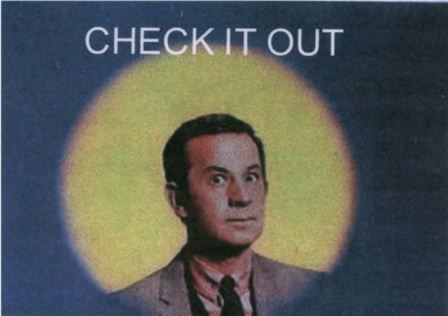
We’ve set our time machine back to 1985 and switch on CTV, Howard Bannister and the gang is on. This week on Rewind, we check out Check It Out!
Watching supermarket sitcom Check It Out! (CTV 1985-1988) in 2012 is a wild mind trip to television’s past. The show is complete with the typical 80s sitcom antics right down to the decade’s signature massive hairdos. Unabashedly retro, Check It Out! appears to be completely oblivious to the fact that it was setting itself up to look very dated very quickly.
At first glance, Check It Out!  may simply seem to be a vehicle for Get Smart’s Don Adams. This time instead of playing a spy, Adams takes the role of the store manager of a large supermarket chain. In a typical episode of Check It Out! you’ll get to see Adams’ character Howard Bannister interact with various fellow dim-witted employees and some difficult patrons. Despite its ho-hum premise and the predictable writing (compared to today’s television), it lasted a solid three seasons on CTV and even made it onto the USA network and syndication in the States.
Personally, I found it a bit jarring seeing Adams staring in a little Canadian show like Check It Out! but it was the 80s; Bea Arthur, then star of the popular series The Golden Girls was even doing commercials for Shoppers Drug Mart back then. To have American stars show up so prominently in the Canadian homegrown scripted TV business seems to be a less common phenomenon now. It’s rare to see a big-name American celebrity staring or guest starring on Canadian TV. Exceptions to the rule include Felicity and Mighty Morphin Power Rangers’ Amy Jo Johnson who now stars in CTV’s Flashpoint and Ed Asner of Mary Tyler Moore and Lou Grant fame who made a few guest appearances on Michael: Tuesdays and Thursdays.
The series shares some similarities to TBS’ 10 Items or Less which was canceled way back in 2009. 10 Items felt much like a remake of Check It Out! done in a similar style to NBC’s The Office and also added the improvisational style of Curb Your Enthusiasm. It too lasted three seasons on American cable. Neither 10 Items nor Check It Out! seemed to click with their audiences. My theory is that supermarkets aren’t the most exciting eventful places in the world and they often don’t produce the most exciting characters. But then again, CTV’s Corner Gas was set virtually in the middle of nowhere with some average middle-of-the-road characters and it turned out to be one of Canadian television’s greatest hits.
If you’d like to catch up with Check It Out! you’ll find it over on Comedy Gold.
